The changing face of architectural photography
Architectural photography has always been about more than simply recording a building. It is about understanding architecture, interpreting space, appreciating the relationship between light and form, and communicating an architect's original vision.
As an architectural photographer, I have spent many years developing the skills necessary to represent buildings at their best while remaining faithful to the architecture itself.
The arrival of artificial intelligence presents both opportunities and challenges for my profession. AI-powered editing tools are becoming increasingly sophisticated, allowing images to be transformed in ways that would previously have required considerable technical expertise.
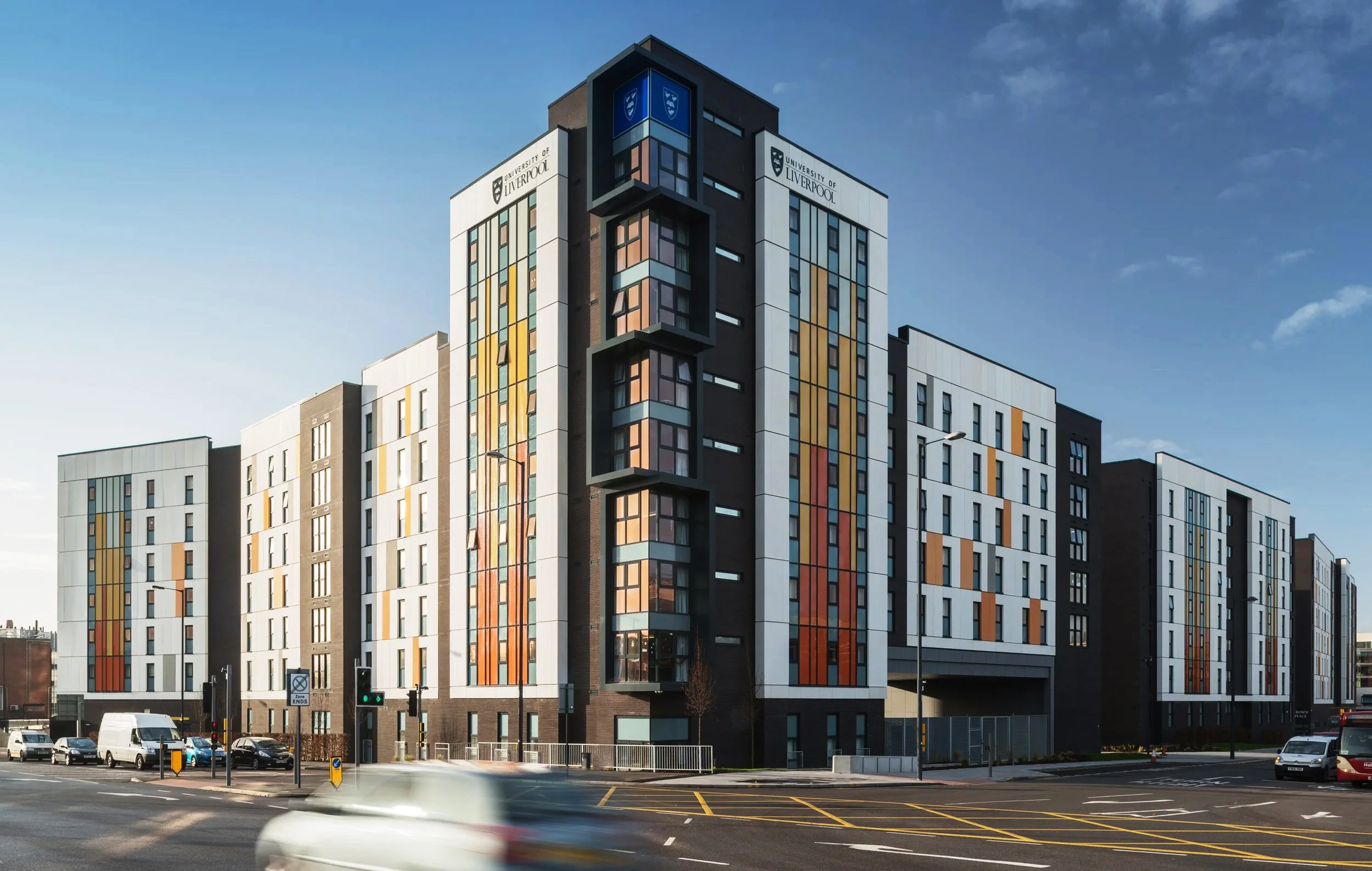
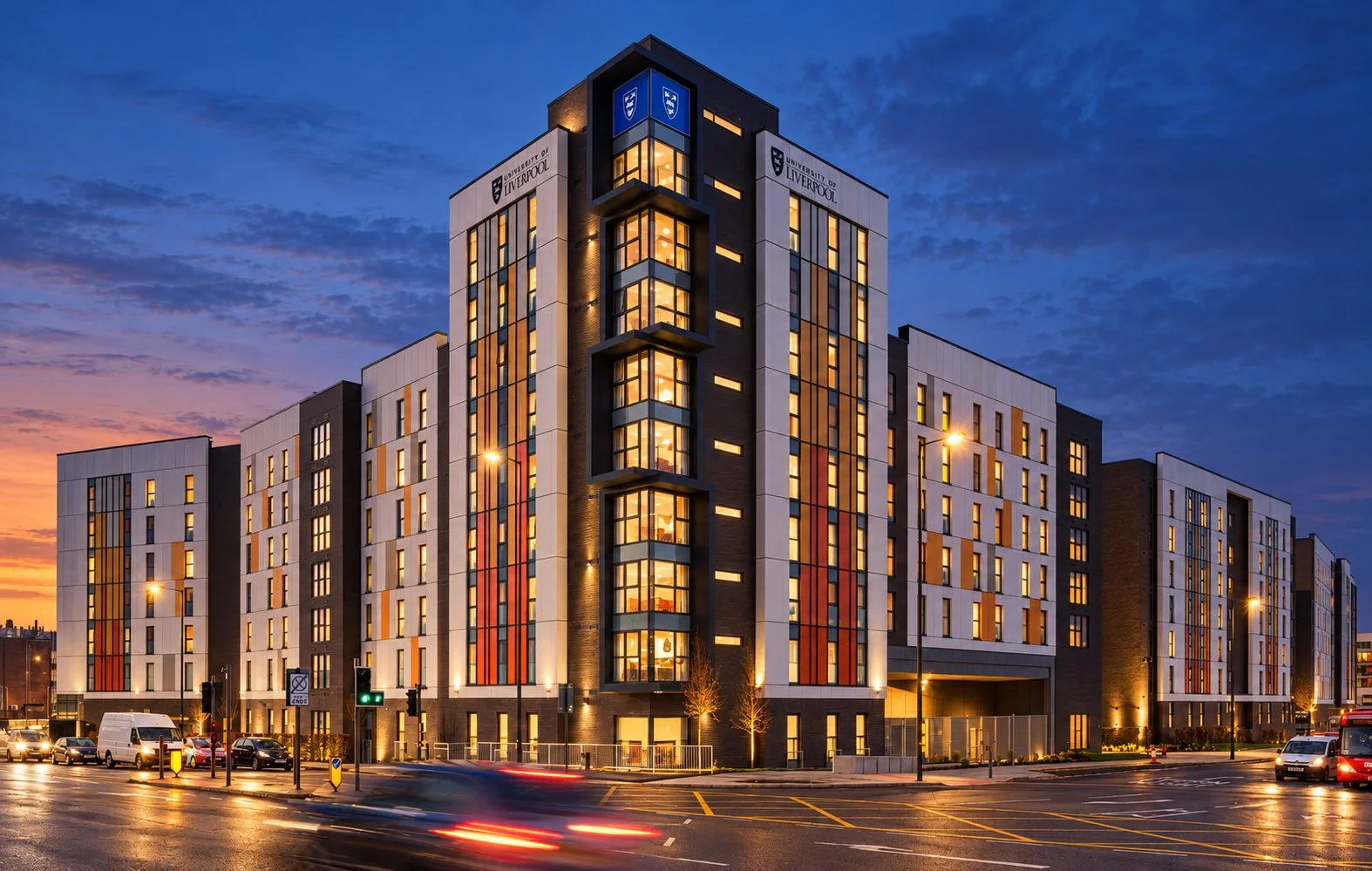
As an example, a daylight photograph can now be converted into a dramatic twilight scene in seconds. Skies can be replaced, lighting introduced, landscaping transformed and unwanted surroundings removed.
The results can be visually impressive. But when these images are used to promote completed architectural projects, particularly for prestigious architectural awards competitions, an important question arises:
Are we still judging the architecture, or are we judging an artificially manufactured representation of it?
Photography versus visualisation
There has always been an element of interpretation in architectural photography.
I choose the viewpoint, composition, time of day and lighting conditions. Professional post-production allows me to refine exposure, colour balance, contrast and perspective, which are, of course, established and accepted photographic techniques.
However, I believe there is a fundamental distinction between improving the presentation of an authentic photograph and creating visual conditions that never existed.
Consider a building photographed on an overcast afternoon. Using AI, that same image could be transformed into an atmospheric dusk photograph, complete with illuminated windows, dramatic skies and carefully balanced architectural lighting.
The resulting image might be beautiful. But is it an accurate photographic record of the conditions under which the building was documented?
It has become something closer to an architectural visualisation. There is nothing inherently wrong with architectural visualisation. It plays an essential role in communicating design concepts and proposed developments. Architects have used CGI for many years after all!
The problem arises when artificially generated visualisations are presented as authentic photographs of completed buildings.
Architectural awards and the question of fairness
Architectural awards celebrate design excellence, innovation, sustainability and the successful integration of buildings into their environments.
Photography plays an enormously important role in this process.
Judges frequently rely upon submitted images to form their initial impressions of a project. Photographs communicate the building's materials, spatial qualities, relationship with its surroundings and architectural character. But what happens when those images have been materially altered using AI?
Imagine two architectural practices entering the same awards competition.
One commissions a professional architectural photographer to document its completed project, working carefully with the available light and actual architectural conditions.
The other submits images that have been enhanced using generative AI, introducing dramatic lighting, more attractive surroundings or architectural details that were not present in the original photographs.
Both projects may be architecturally accomplished.
However, the visual evidence presented to the judges is no longer directly comparable.
The question is no longer simply which building demonstrates the greatest architectural merit.
It becomes a question of which submission has the most persuasive imagery.
Surely architectural awards should recognise excellence in architecture rather than excellence in artificial image manipulation?
The importance of photographic integrity
For professional architectural photographers, reputation is built upon technical ability, creative judgement and the trust of clients.
When I deliver commissioned photographs, those images represent my interpretation of the architecture and my professional standards.
Increasingly, however, photographers face the possibility that their images may subsequently be altered by clients, designers, marketing departments or third-party agencies using AI.
My photography originally captured in daylight might be converted into a twilight scene without my knowledge or approval.
The resulting image may still carry my name and copyright attribution, which then raises significant questions about authorship, professional responsibility and creative integrity.
If an image has been substantially altered after delivery, can it reasonably continue to be presented as my original work?
I would argue that it cannot.
We as photographers should have a meaningful say in how their commissioned work is subsequently altered, particularly when those alterations fundamentally change the appearance or interpretation of the architecture.
Where should we draw the line?
It would be unrealistic to suggest that architectural photography should be entirely free from digital processing.
Photography has always involved technical interpretation, from traditional darkroom techniques through to contemporary digital post-production.
The distinction, in my view, should be whether the process preserves the essential truth of the architecture.
Adjusting exposure, correcting perspective, balancing colour and combining bracketed exposures are, as previously mentioned, are legitimate (and expected) photographic techniques.
However, using generative AI to introduce architectural lighting that never existed, remove permanent neighbouring structures, substantially change landscaping or create entirely different environmental conditions crosses an important boundary.
It is no longer simply photographic refinement. It is the creation of an alternative visual reality and this distinction becomes especially significant when photographs are used as documentary evidence in architectural competitions.
Should architectural awards introduce AI disclosure requirements?
I believe the architectural profession should now consider introducing clearer standards governing the use of AI-generated or materially manipulated images in awards submissions.
Instead, they should establish a distinction between conventional photographic processing and alterations that materially misrepresent the completed project.
Architectural practices could (should?) be required to declare whether submitted images have undergone generative AI manipulation.
Awards organisers could also establish rules preventing the undisclosed addition, removal or substantial alteration of architectural features, lighting conditions and surrounding environments and where images have been materially altered, they should be clearly identified as visualisations rather than documentary photographs.
Responsibility for these declarations should rest with the submitting architectural practice, which may have commissioned or modified images after receiving them from the photographer. Such an approach would help protect the integrity of awards competitions while allowing architects and photographers to continue exploring new creative technologies.
AI is not the enemy of architectural photography
However I do not believe photographers should reject artificial intelligence simply because it represents technological change.
AI already offers useful tools for improving photographic workflows, managing image selections, refining technical corrections and reducing repetitive editing tasks and used responsibly, these developments can benefit both photographers and their clients.
However, technology should support the communication of architecture rather than replace architectural reality with something more visually convenient.
There is a difference between using AI to improve the technical quality of an image and using it to invent a scene that was never photographed and that distinction is not always straightforward, but that is precisely why the profession needs an informed discussion.
A responsibility shared by photographers and architects
Architectural photography is a collaboration between the photographer and the architect.
The architect creates the building.
The photographer interprets and documents that building through composition, perspective and light.
Both disciplines depend upon professional credibility.
When photographs are used to represent completed projects, particularly in publications and awards submissions, that credibility should extend to the authenticity of the imagery.
Architects should be confident that their work is being judged on its genuine merits.
Photographers should be confident that their images will not be fundamentally transformed without their consent.
And awards organisers should be confident that the visual evidence presented to judges represents the buildings being assessed.
The future of architectural photography
As generative AI continues to develop, the distinction between photography and computer-generated imagery will become increasingly difficult to recognise.
We are approaching a point where an entirely convincing architectural photograph may be produced without a camera ever being used.
That presents an important challenge for the architectural profession.
If photographs can be manipulated to create idealised lighting, perfect surroundings and flawless architectural conditions, we risk losing something fundamental: the ability to distinguish between the building as designed, the building as constructed and the building as artificially presented.
Architectural photography should celebrate the reality of architecture.
It should reveal the qualities of a building through observation, technical skill and creative interpretation and it should not need to invent a different reality to make architecture appear successful.
Artificial intelligence will undoubtedly influence the future of architectural photography. The challenge is ensuring that it enhances our ability to communicate architecture without compromising the authenticity upon which professional photography depends.
Paul McMullin is a professional architectural photographer based in the Liverpool and North West England region, working with architects, designers and organisations throughout the UK and overseas.